
Founding intent
The reason the organisation was created: its perspective, standard and right to choose.
Corporate Ideology
Everything around us began as someone’s idea. Corporate ideology translates the founder’s intent into the language, principles and decisions of the organisation.
This is a practical application of the Meaning-Based Management approach.
How the system works ↓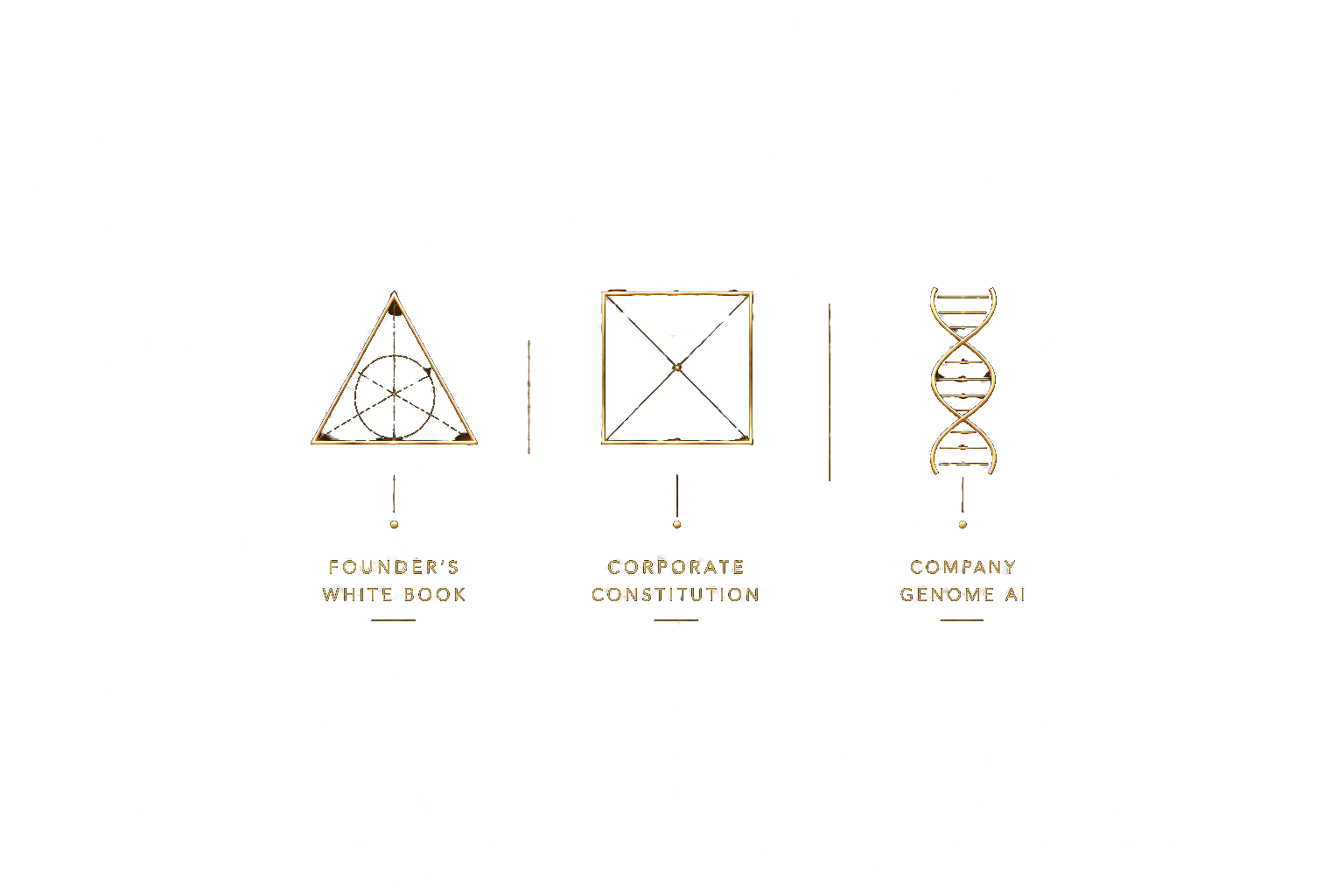
01 / Definition
Ideology connects two foundations: idea and logos. The idea defines what should become real. Logos gives that intent a shared language and order. While the idea exists only in the founder’s mind, it cannot guide an organisation. Once articulated, it can shape structure, decisions and action.
The reason the organisation was created: its perspective, standard and right to choose.
A shared language that translates intent into principles, boundaries and decision criteria.
02 / Purpose
Purpose is not an inspirational slogan. It is the organisation’s reason for being. It defines the function the organisation performs within a wider system, preserves direction under pressure and constrains decisions.
A strong purpose answers not only “what do we do?” but also “what will we not do, even for commercial gain?”
03 / Values
The organisation voluntarily adopts rules that cannot be changed for short-term convenience. They define what is acceptable and provide direction when conditions are uncertain.
What is acceptable. What is not. Which compromises the organisation will refuse.
What takes precedence when decisions conflict: long-term value or short-term gain.
Who applies the values in strategy, hiring, resource allocation and public positions.
Every material decision is tested against purpose, archetype and values. A conflict at any level requires review.
04 / Archetype
Purpose answers why. Archetype defines how the organisation engages with the world. The recurring patterns described by Jung provide a coherent and accessible behavioural model.
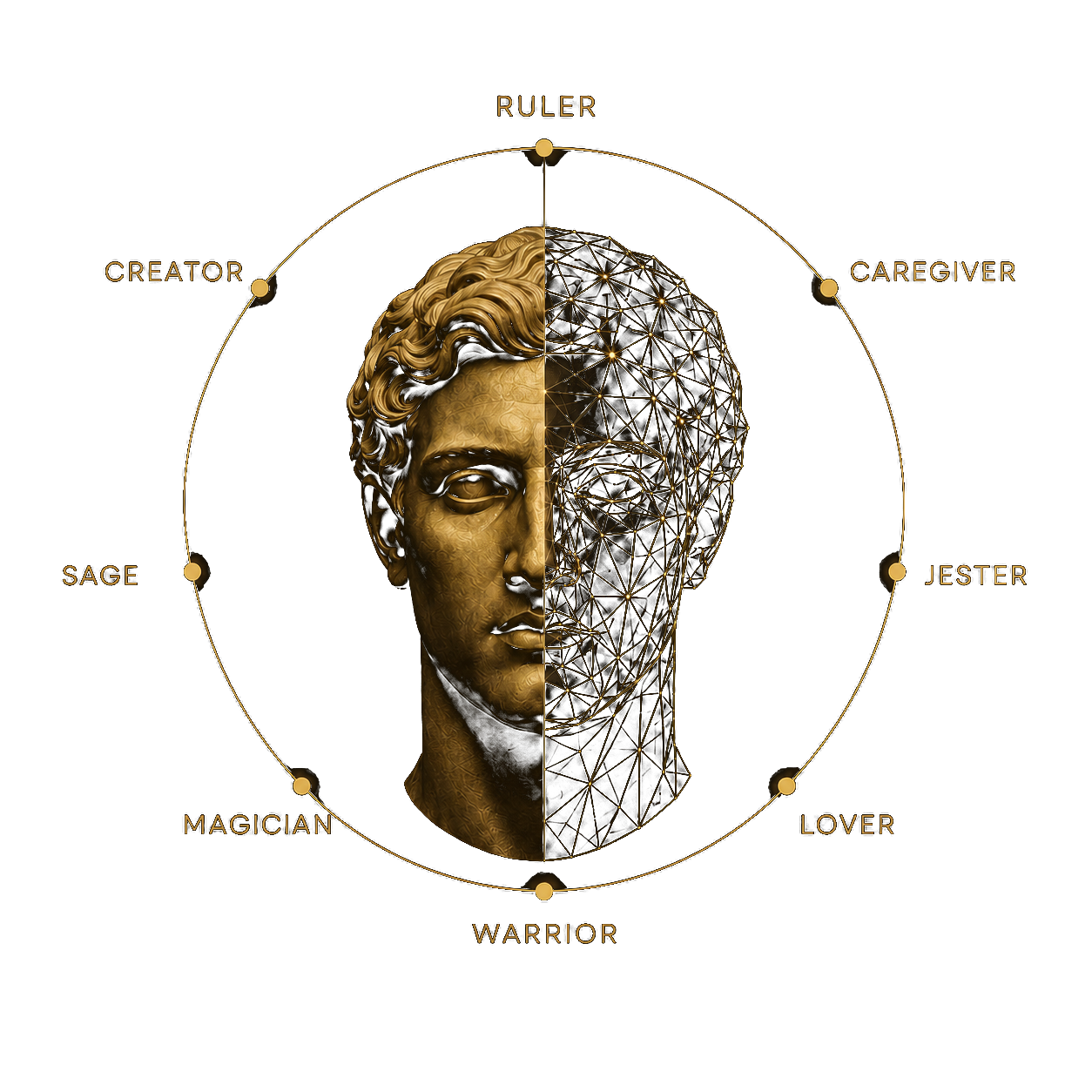
An archetype is neither a decorative image nor a personality test. It is an operating model that aligns strategy, decision style and the organisation’s relationship with its environment.
It informs talent selection, sales, partnerships, marketing, PR, brand language and brand aesthetics.
05 / Architecture
Purpose and values do not govern if they remain in a presentation. An operating ideology derives clear principles from the founding intent and connects them to organisation design.
Founder’s intent and organisational function.
Purpose, values, archetype and non-negotiable boundaries.
Strategy, structure, decision rights and decision criteria.
Hiring, incentives, communication, product and leadership behaviour.
Words become a system only when they begin to constrain real decisions.
06 / Core documents
The founder’s personal position and the organisation’s normative core are documented separately. Together they provide the basis for continuity and more autonomous management.
Defines the founder’s intent, principles, boundaries and decision criteria. Essential for serial entrepreneurs, public figures and political leaders whose personal logic shapes more than one system.
Learn more →A meta-strategic document for the organisation. It translates the founder’s intent into purpose, values, archetype, strategic boundaries and decision principles.
Learn more →07 / Integration
Adults protect established belief systems. Imposing new values directly creates resistance or superficial compliance. Integration therefore requires a structured sequence of changes to the environment, decisions and management practice.
Identify actual rules and systemic contradictions.
Define principles, boundaries and observable behaviours.
Connect ideology to processes, language, hiring and incentives.
Test behaviour and decisions, not recall of statements.
Ideology works when operating decisions and actions preserve the founding intent without the founder’s constant presence
Discuss your context